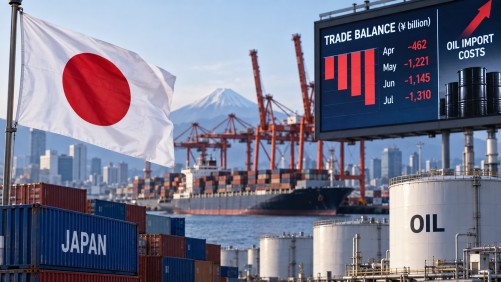
Japan’s trade balance remained in deficit for the fourth consecutive month in August, with a shortfall of approximately 1.1 trillion yen ($7 billion), according to preliminary data from Japan’s Finance Ministry. The ongoing deficit is attributed to escalating import costs driven by higher oil prices, exacerbated by geopolitical tensions in the Middle East affecting oil supplies and shipping routes.
Imports surged by 28% year-on-year, reaching 11.15 trillion yen ($71.9 billion). The energy-dependent nation has been severely impacted by rising crude oil prices, particularly due to disruptions around the Strait of Hormuz, a critical chokepoint for global oil shipments. This increase in import costs has significantly contributed to Japan’s trade deficit.
In contrast, exports from Japan grew by 19.3% compared to the previous year, totaling 10 trillion yen ($64.5 billion). The growth in exports was primarily driven by strong shipments in the automobile and computer chip sectors. Notably, exports to the United States saw a significant rise of 24.9%, while imports from the U.S. increased by 55.2%, reflecting robust bilateral trade.
Trade with Europe also showed positive trends, with exports increasing by 11% and imports rising by 20.4%. However, trade with the Middle East reflected the regional instability, as Japan’s exports to the region declined by 5.2%, and imports fell by 4.2%.
Japan’s reliance on imported energy continues to influence its trade dynamics, and the ongoing geopolitical issues in the Middle East pose challenges to stabilizing import costs, which could impact the country’s trade balance moving forward.