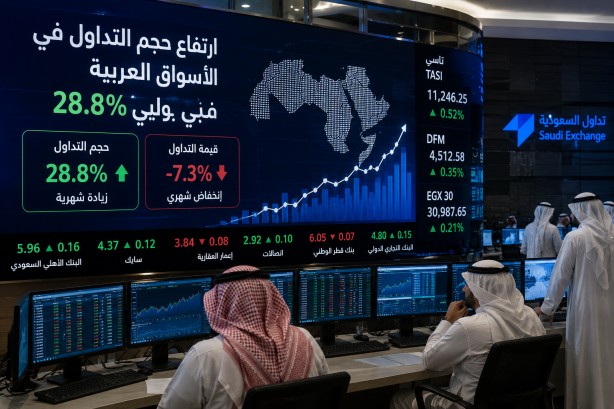
Arab stock markets witnessed a notable surge in trading activity in July, as the volume of shares traded jumped by 28.82% from the previous month. This increase brought the total trading volume to 261.86 billion shares, compared to 203.27 billion in June. The Iraq Stock Exchange led this upswing, followed by Egypt, showcasing a robust interest in trading despite a downturn in the overall transaction values.
Contrary to the rise in trading volume, the total value of transactions saw a decline, dropping by 16.82% to $90.24 billion in July from $108.48 billion in June. This decrease in transaction value was observed across several key markets, including Egypt, Saudi Arabia, Dubai, Abu Dhabi, and Kuwait, indicating a complex trading environment with mixed financial outcomes.
Market performance in the region showed varied results, with Egypt’s EGX30 index standing out as one of the best performers, posting a gain of 5.85% during the month. This positive movement highlights Egypt’s relative strength in an otherwise mixed landscape where other regional exchanges also experienced some gains.
In terms of overall market health, the combined market capitalization of Arab stock exchanges remained mostly stable, with a slight increase of 0.06% to approximately $4.31 trillion. This stability in market capitalization suggests a steady investor confidence, even as trading activity intensified and transaction values fluctuated.
The latest figures underscore a dynamic period for Arab stock markets, characterized by heightened trading volumes yet tempered by reduced transaction values and mixed performances among major equity markets in the region. This complex scenario reflects both the challenges and opportunities present within the region’s financial markets.