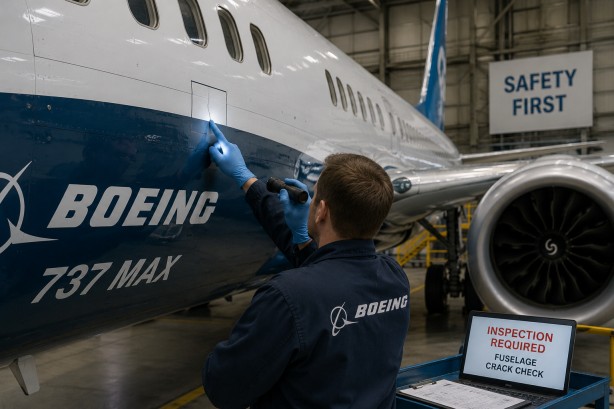
The Federal Aviation Administration (FAA) has directed airlines operating Boeing 737 Max aircraft to conduct inspections for potential cracks in a crucial structural part of the fuselage. This directive affects approximately 471 aircraft, with inspections slated to commence in September. The focus is on a structural component called the bear strap, which consists of sheets that reinforce the fuselage around the plane’s exit doors. These inspections come in the wake of similar issues detected in older Boeing 737 Next Generation models, where cracks had been previously identified.
While no cracks have yet been reported in the 737 Max fleet, the FAA highlighted that the aircraft shares a design and manufacturing process that could potentially lead to the same problem. The regulatory body cautioned that if these cracks go unnoticed, they could compromise a major structural element and pose risks to the aircraft’s overall integrity. Boeing has expressed its cooperation with airlines regarding this issue since its identification in 2019, supporting the mandatory inspections as a preventive measure.
Boeing emphasized that these checks are intended to identify and address any issues before they develop into critical problems. The inspections add to the ongoing scrutiny of the 737 Max series, which has faced intense examination over safety and manufacturing standards following past incidents. The aircraft model was grounded globally after two tragic crashes in 2018 and 2019, prompting heightened focus on its safety features and engineering quality.
The initiative to inspect the 737 Max fleet underscores the aviation industry’s commitment to maintaining safety and preventing future incidents. Boeing’s proactive stance in collaborating with airlines to ensure thorough inspections reflects its focus on addressing potential vulnerabilities before they escalate. As the aviation sector continues to bolster safety measures, these inspections represent a critical step in safeguarding aircraft structural integrity and passenger safety.