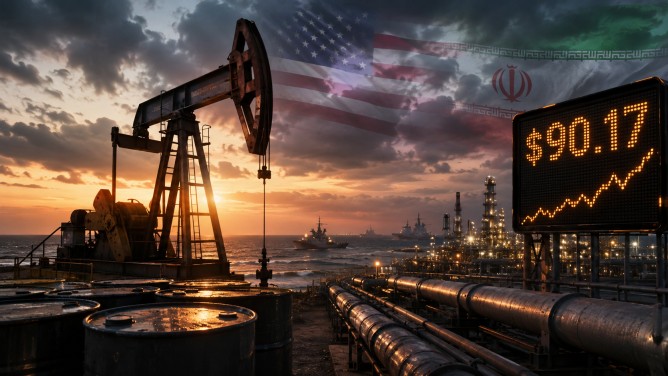
Oil prices have surged significantly following the lapse of a two-month negotiation period between the United States and Iran, which ended without a peace agreement. This development has fueled concerns about the potential continuation of conflict and its impact on global energy supplies. Brent crude prices have soared past $90 a barrel, reaching approximately $91.63, marking the highest level since July 30. The increase comes in the wake of US President Donald Trump’s demand for Iran to surrender, accompanied by a warning that the situation could escalate if diplomatic efforts falter.
The Strait of Hormuz, a vital passageway for global oil shipments, has become a focal point of concern amid the growing tensions. The number of commercial vessels navigating this critical route has dropped substantially, heightening fears of extended disruptions to oil supplies. Iran has hinted at the possibility of adopting a more aggressive military posture if negotiations break down. A reported attack on a cargo vessel traversing the strait has further exacerbated worries about the safety of maritime operations in the region.
Investors are bracing for the possibility of a prolonged disruption in oil supplies, as any extended closure or reduction in traffic through the Strait of Hormuz could exert additional upward pressure on crude prices. The strategic waterway is crucial for the transportation of a significant portion of the world’s oil, and any hindrance in its operations could have far-reaching implications for energy markets worldwide.
Analysts are cautioning that continued unrest in the Middle East, coupled with the ongoing conflict in Ukraine, could lead to further volatility in global energy markets. The combination of these geopolitical tensions has the potential to drive up oil and gas prices, creating additional economic challenges on a global scale. The interplay of these factors underscores the intricacy and vulnerability of the current energy landscape.